Charting a Fulfilling Career Path: A Journey Into the Work of a Sidekick

Charting a Fulfilling Career Path: A Journey Into the Work of a Sidekick
By Amanda Rodriguez


It was the end of 2021, and I was looking for a new job. I had worked in adult behavioral health for years but wanted a little bit of change. That’s when I saw an ad posted on Indeed.com indeed.com for Sidekicks Support Services. I read through the postings for an ABA Therapist and for a Behavior Technician. I checked out the Sidekicks website.


“Every Superhero Needs A Sidekick”. That slogan stuck.


I continued reading and quickly felt like this could be a place whose values truly aligned with mine. I wrote a cover letter and submitted my resume. The rest, as they say, is history!


I started working part-time with Sidekicks as a Behavior Technician in the Individual Support Services (ISS) program. This means I worked with children ages 3-21 who were diagnosed with intellectual or developmental disabilities. I worked in their homes and in the community and taught life skills. First, I had virtual training, and then hands-on training during the first few sessions with each child I worked with. I even got to shadow a Sidekick while they worked with a Superhero! Fantastic families, friendly and welcoming staff, paid training… I was thrilled with my new position and proud to work for a company that was so passionate about what they do.
With hard work and dedication, I was promoted to ISS Supervisor within my first year. Becoming a supervisor came with more training and responsibility. As a supervisor, I am responsible for assessing client needs, writing treatment plans, communicating with the kids’ Care Managers, training new staff, supporting staff and families, and overseeing services. It was hard work, but very rewarding.


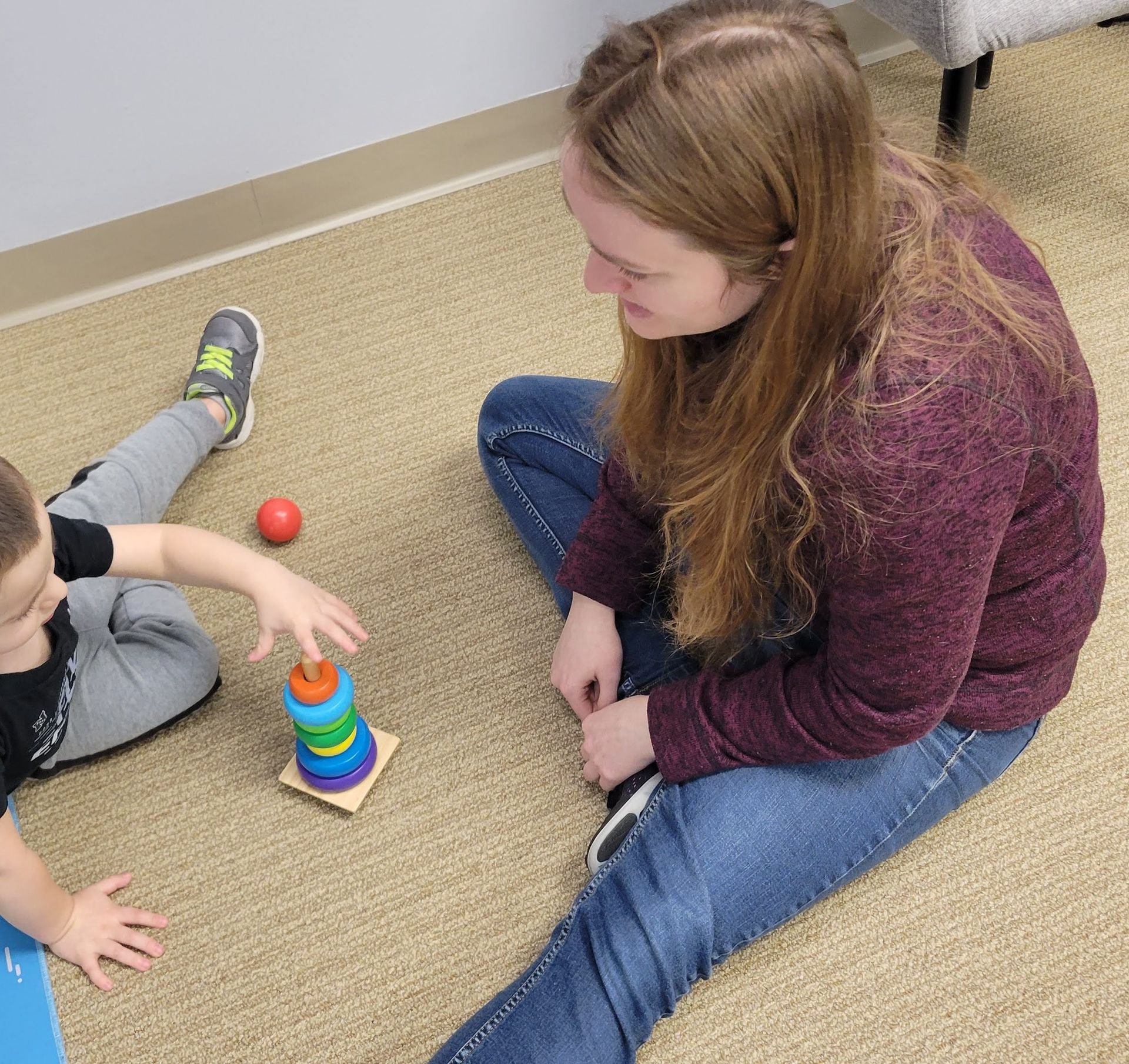
After getting experience through ISS, I was interested in expanding my knowledge in the field and working more hours. Sidekicks was more than happy to support my growth; I was given additional training to start working some hours as an ABA therapist. Applied behavior analysis (ABA) is therapy based on the science of learning and behavior. As an ABA therapist, I work with children ages 2 and over who have an autism diagnosis. A Board Certified Behavior Analyst (BCBA) supervises and guides me. The BCBA writes a plan, then teaches and trains me on how to implement the plan by running various programs and collecting data.


At this point, after just over a year with the company, I had learned and grown so much. I loved the job, the company, my peers… so it was a no-brainer to apply when a position as an Administrative Manager opened up. I was offered the position and happily accepted. That brings me to where I am today! Working full time for a company I love and believe in. I still do both ISS Supervision and ABA Therapy and also support the company through admin and HR work. I have grown so much as a person and an employee – and have everyone at Sidekicks Support Services to thank for that. My coworkers always support me, check-in, answer questions, and don’t hesitate to help me anytime I need it.

Sidekicks is an amazing place to work. If you’re interested in working with kids with disabilities, or adults (yes – we even provide support to disabled adults through our Direct Support Professionals!), please don’t hesitate to reach out to us. We will do our best to find a position for you, whether you have a bachelor’s degree, a master’s degree, no degree, or varying levels of experience. Our purpose is growing, and we are always looking for more Sidekicks to join the family and help those Superheroes. Click here for our employment page!

Stay tuned for more blogs about my day to day in all the positions I have worked!


By Sidekicks Support Services June 5, 2026
Individual support services in Princeton, NJ help individuals aged 4-21 develop daily living skills, personal care, and community navigation abilities through personalized guidance.
By Rosemarie Bonomo, BCBA, LBA June 3, 2026
Teaching Independent Behavior with an Activity Schedule
By Sidekicks Support Services May 5, 2026
Daily living assistance in Lawrence, NJ supports adults with new diagnoses of intellectual and developmental disabilities, promoting independence through personalized in-home services.
By Sidekicks Support Services May 5, 2026
Functional Communication Training in West Windsor, NJ teaches children with autism and developmental disabilities effective communication strategies to reduce challenging behaviors and improve social interactions.
By Sidekicks Support Services May 5, 2026
Community integration support in Trenton, NJ teaches individuals with developmental disabilities skills for navigating public spaces, social interactions, and accessing community resources throughout New Jersey.
By Tara Folmer BCBA April 21, 2026
Meltdowns can feel overwhelming for both children and parents. One minute, everything is fine, and the next, your child is crying, yelling, or completely shutting down . It’s easy to think: “They’re being defiant.” “They need consequences.” But the truth is… meltdowns are not misbehavior. They are a signal. What Is a Meltdown? A meltdown happens when a child becomes so overwhelmed that they lose the ability to cope. This can look like: Crying or screaming Dropping to the floor Refusing to move Hitting or throwing items Shutting down completely At this point, your child is not choosing this behavior; they are struggling to regulate their body and emotions. Why Do Children Have Meltdowns? Meltdowns don’t come “out of nowhere.” There is always a reason, even if it’s not obvious in the moment. 1. Difficulty Communicating Some children don’t yet have the skills to say: “I need help.” “This is too hard.” “I want a break.” So instead, their behavior does the talking. 2. Transitions and Changes Many children struggle when: Leaving a preferred activity Switching tasks Plans change unexpectedly Even small transitions can feel like a big loss of control. 3. Sensory Overload Environments that feel typical to us can be overwhelming to a child: Loud noises Bright lights Busy spaces Their nervous system becomes overloaded. 4. Difficulty Waiting or Delayed Gratification Waiting is a skill, and for some children, it’s a very hard one. 5. Fatigue, Hunger, or Illness Sometimes the cause is simple: Tired Hungry Not feeling well These are often called “setting events,” and they make meltdowns more likely. Why Punishment Doesn’t Work: When a child is in a meltdown, their brain is in survival mode. They are not able to: Process consequences Learn from the situation “Think through” their behavior Punishment in this moment often: Escalates the meltdown Damages trust Doesn’t teach the child what to do instead What to Do Instead: 1. Stay Calm (Even When It’s Hard) Your calm helps regulate your child. Think of it as: “I’m lending them my calm until they can find their own.” 2. Reduce Language During a meltdown, less is more. Instead of long explanations, try: “I’m here.” “You’re safe.” “Let’s take a break.” 3. Give Space (When Safe) Some children need space to regulate. Stay nearby, but don’t overwhelm them with demands or questions. 4. Support Regulation Help their body calm down: Deep breaths (if they can tolerate it) Quiet space Comfort item Sitting together quietly 5. Teach Skills After the Meltdown This is the most important part. Once your child is calm, you can teach: How to ask for help How to request a break How to wait How to handle “no” This is where real learning happens. Rethinking Our Approach to Meltdowns: The goal is to: ✔ Understand why they’re happening ✔ Teach replacement skills ✔ Reduce them over time A Different Way to Look at Behavior: Instead of asking: “How do I stop this behavior?” Try asking: “What is my child trying to communicate?” Key Takeaways: Meltdowns are hard, but they are also opportunities. They tell us: What skills a child is missing What support they need Where we can help them grow And with the right strategies, meltdowns can become less frequent, less intense, and easier to manage.
By Alli Rawlins February 26, 2026
Many children diagnosed with autism have a difficult time communicating effectively with those around them. They may not be able to communicate their wants and needs clearly and this could lead to frustration and challenging behaviors. When children lack the skills to communicate they find other ways to let others know what they need which sometimes comes in the form of challenging behaviors like crying and tantrums. Many times the challenging behaviors you are seeing are actually attempts to communicate! How can we help children communicate effectively? In ABA one of the tools we use is Functional Communication Training (FCT). Functional Communication Training helps reduce challenging behaviors by teaching an alternative and more effective way to communicate wants and needs. By pinpointing the behavior's function and teaching a replacement skill, we not only reduce challenging behaviors but also promote meaningful growth in communication. How do ABA practitioners implement FCT? Here is a step by step guide on how we implement FCT: Step 1: Identify the function of the challenging behavior. This is the most important step! The function of the behavior is the reason the child is engaging in the behavior. Behavior analysts identify four main functions of behavior: Escape/Avoidance: To get out of an unpleasant situation or task. Attention-Seeking: To gain social interaction or acknowledgment. Access to Tangibles: To obtain a preferred object or activity. Sensory Stimulation: For self-soothing or stimulation. Step 2: Determine an appropriate replacement skill The next step is to decide on the communication skill that we will teach as a replacement. It is important that the replacement behavior directly addresses the function of the original behavior. If it was found that the challenging behavior is escape maintained then we may teach the child to use a “break card” to appropriately request a break. Make sure to teach a skill that the child can easily accomplish. We want the replacement behavior to be easier to use than the original challenging behavior. Step 3: Teach the communication skill Now we are ready to teach the child the replacement behavior or the communication skill. When teaching a new skill it is important to do so when the child is calm and receptive. Set aside dedicated time to practice the new skill in a structured and controlled setting. During practice time we simulate situations where the child would use the new communication skill and we teach the child to use the new skill to communicate using the new skill. Step 4: Provide Reinforcement Reinforcement is crucial to help children to adopt the new skill they learned as a replacement for the challenging behaviors they used previously to communicate. For the replacement skill to be successful it has to be just as effective or even more effective in meeting their needs. The reinforcement should be immediate and consistent access to what the child requests using their newly learned communication skill. For example, if the child requests a break using a break card they should be immediately granted access to a break. Step 5: Collect and Analyze Data In order for Behavior Analysts to know if the FCT process is successful they need to collect and analyze data. Data should be collected on the frequency of the child’s use of the replacement skill and graphed to visually monitor progress. If progress is not occurring the behavior analyst will make changes to the plan in order to ensure that the child is progressing. Common mistakes and myths about Functional Communication Training: Myth! Functional Communication Training requires the child to be verbal FCT teaches a skill to communicate a need or want. This can be a verbal request or it can be a nonverbal communication such as a picture card, a gesture or other action. Mistake! Teaching an unrelated skill If the replacement skill is unrelated to the function of the behavior it will not reduce the challenging behavior as it does not address the child’s need. Mistake! Teaching a skill that is too general It is important to be targeted in the skill that is taught as a replacement. Teaching general requests will be much less effective. For example, teaching a child to use the sign language sign for “more” when they want more of their food. It is more helpful to teach the child to be able to be specific in what they want to avoid frustration when caregivers do not know what the child wants more of. Teaching the child to use picture cards to point to the specific item that they want will be more effective to accurately communicate the child’s needs and wants. Functional Communication Training is a powerful tool that focuses on communication as a replacement for challenging behaviors. FCT helps to reduce challenging behaviors while helping children to develop critical communication skills that help them to better communicate with the important people in their lives. Talk with your BCBA about how to incorporate functional communication to build your child’s communication skills and empower your child with the skills they need to communicate effectively!
January 13, 2026
Navigating the world of Applied Behavior Analysis (ABA) therapy can feel overwhelming, especially when you add the complexities of insurance and billing. For parents of newly diagnosed children and current families alike, one thing is clear: you deserve transparency. The single most important thing you should know is that a trustworthy provider will be an open book about their financial practices. Your focus should be on your child's progress, not on decoding confusing invoices. To help you find a partner who values clarity as much as you do, here are the five core questions you must ask any ABA provider before you begin services. 1. What is my out-of-pocket cost for ABA Therapy? Explaining the ‘Explanation of Benefits’ (EOB) This is the most fundamental question. A vague answer here is a major red flag. You need a clear, written breakdown of your financial responsibility. The provider should be able to give you a detailed estimate based on your specific insurance plan. They should explain the key components of your cost including any deductible, co-pay or co-insurance and out-of-pocket maximums. A good provider will proactively send you the EOB and help you understand what it means. 2. What happens if my insurance provider changes once services start? People change jobs and insurance plans. A prepared provider will have a clear, standardized process for this transition to minimize disruption to your child's therapy. It is imperative that you notify your provider immediately of any insurance or plan changes. The provider should immediately re-verify your new benefits, including deductibles, co-pay, and authorization requirements. Families should be aware that insurance co-pays, co-insurance, and deductibles are reset annually on January 1. As a result, increased out-of-pocket costs may apply. 3. What happens if my insurance provider denies claims? Claim denials are common, especially in ABA therapy. The provider should have a dedicated billing department or specialist who handles claim denials and their process for correcting errors, peer-to peer review and formal appeals. 4. Am I responsible for missed or cancelled appointments? The provider should have their cancellation policy in writing. It should specify the notification process, cancellation fees and exceptions. 5. How are service authorizations tracked by the agency? Insurance companies authorize ABA therapy in specific blocks of time (e.g., a certain number of hours per month for six months). If the provider fails to track this accurately, your child's services could suddenly stop. The provider should use a system to track each client's authorizations start date, end date, and total authorized hours. By asking these five questions, you force the provider to demonstrate their competence, transparency, and commitment to clear communication. Their answers will tell you everything you need to know about whether they are a partner you can trust. Transparency in billing isn't just a nice to have; it's the foundation of a trusting partnership between your family and your ABA provider. At Sidekicks, we believe in transparent billing you can trust.
November 6, 2025
For Families with Young Adults (Ages 16–21)
October 22, 2025
At Sidekicks, we’ve always believed that progress doesn’t have to come with fanfare to be worth celebrating. Sometimes, the most meaningful growth is found in the smallest of moments. A smile. Eye contact. Trying something new. Saying a word. Getting through the morning routine independently. These are the quiet victories that build confidence and change lives. It’s easy to get caught up in milestones and timelines, but in our world, success isn’t about comparison. It’s about connection. It’s about seeing every individual for who they are, honoring their pace, strengths, goals, and being fully present for their journey. We work with individuals of all abilities and ages, and what’s universal is this: small steps lead to big breakthroughs. When someone makes a new friend, communicates a need, or simply has a great day, that’s a win. And as a team, we’re here to notice it, appreciate it, and build on it. Families often ask us what progress looks like. The truth is, it looks different for everyone. But when we slow down and recognize the little things, we remind ourselves just how powerful this work is. At Sidekicks, we’re proud to be part of those moments. We celebrate the small wins because we know they’re not small at all.