Understanding Functional Communication Training (FCT) and Why It Matters
Alli Rawlins

Many children diagnosed with autism have a difficult time communicating effectively with those around them. They may not be able to communicate their wants and needs clearly and this could lead to frustration and challenging behaviors. When children lack the skills to communicate they find other ways to let others know what they need which sometimes comes in the form of challenging behaviors like crying and tantrums. Many times the challenging behaviors you are seeing are actually attempts to communicate!
How can we help children communicate effectively? In ABA one of the tools we use is Functional Communication Training (FCT). Functional Communication Training helps reduce challenging behaviors by teaching an alternative and more effective way to communicate wants and needs. By pinpointing the behavior's function and teaching a replacement skill, we not only reduce challenging behaviors but also promote meaningful growth in communication.
How do ABA practitioners implement FCT?
Here is a step by step guide on how we implement FCT:
Step 1: Identify the function of the challenging behavior.
This is the most important step! The function of the behavior is the reason the child is engaging in the behavior. Behavior analysts identify four main functions of behavior:
- Escape/Avoidance: To get out of an unpleasant situation or task.
- Attention-Seeking: To gain social interaction or acknowledgment.
- Access to Tangibles: To obtain a preferred object or activity.
- Sensory Stimulation: For self-soothing or stimulation.
Step 2: Determine an appropriate replacement skill
The next step is to decide on the communication skill that we will teach as a replacement. It is important that the replacement behavior directly addresses the function of the original behavior. If it was found that the challenging behavior is escape maintained then we may teach the child to use a “break card” to appropriately request a break. Make sure to teach a skill that the child can easily accomplish. We want the replacement behavior to be easier to use than the original challenging behavior.
Step 3: Teach the communication skill
Now we are ready to teach the child the replacement behavior or the communication skill. When teaching a new skill it is important to do so when the child is calm and receptive. Set aside dedicated time to practice the new skill in a structured and controlled setting. During practice time we simulate situations where the child would use the new communication skill and we teach the child to use the new skill to communicate using the new skill.
Step 4: Provide Reinforcement
Reinforcement is crucial to help children to adopt the new skill they learned as a replacement for the challenging behaviors they used previously to communicate. For the replacement skill to be successful it has to be just as effective or even more effective in meeting their needs. The reinforcement should be immediate and consistent access to what the child requests using their newly learned communication skill. For example, if the child requests a break using a break card they should be immediately granted access to a break.
Step 5: Collect and Analyze Data
In order for Behavior Analysts to know if the FCT process is successful they need to collect and analyze data. Data should be collected on the frequency of the child’s use of the replacement skill and graphed to visually monitor progress. If progress is not occurring the behavior analyst will make changes to the plan in order to ensure that the child is progressing.
Common mistakes and myths about Functional Communication Training:
- Myth! Functional Communication Training requires the child to be verbal
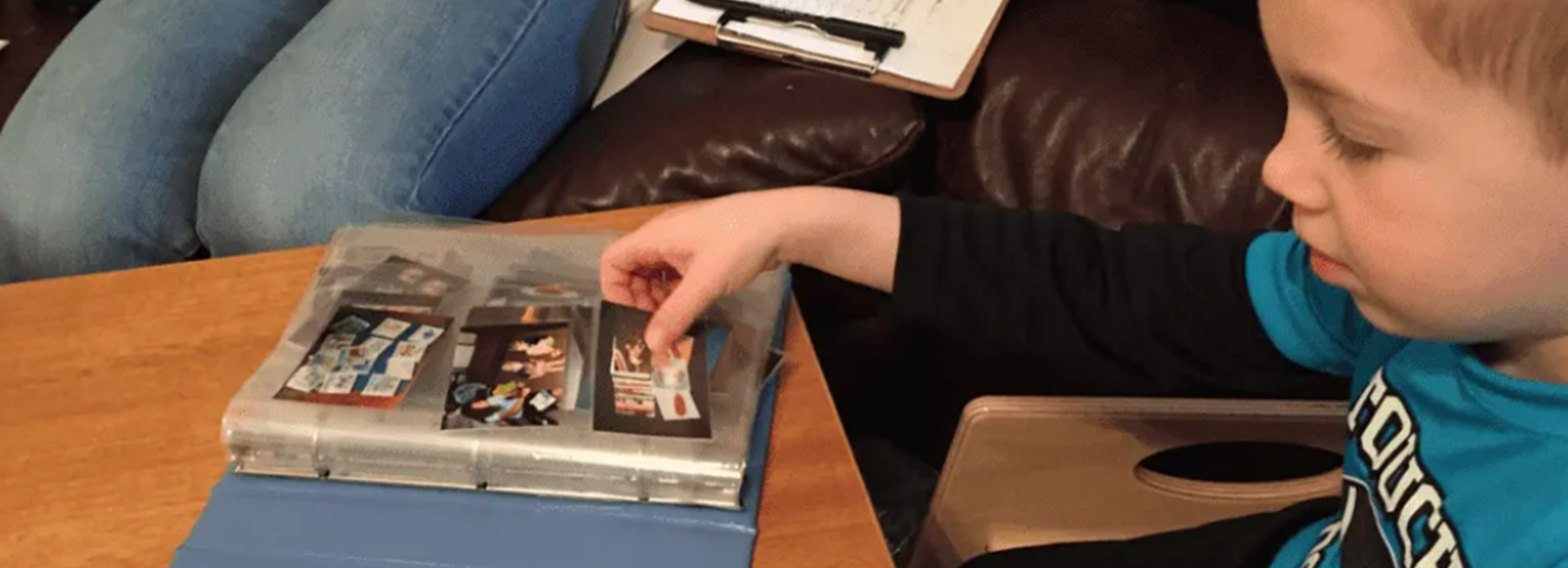
- FCT teaches a skill to communicate a need or want. This can be a verbal request or it can be a nonverbal communication such as a picture card, a gesture or other action.
- Mistake! Teaching an unrelated skill
- If the replacement skill is unrelated to the function of the behavior it will not reduce the challenging behavior as it does not address the child’s need.
- Mistake! Teaching a skill that is too general
- It is important to be targeted in the skill that is taught as a replacement. Teaching general requests will be much less effective. For example, teaching a child to use the sign language sign for “more” when they want more of their food. It is more helpful to teach the child to be able to be specific in what they want to avoid frustration when caregivers do not know what the child wants more of. Teaching the child to use picture cards to point to the specific item that they want will be more effective to accurately communicate the child’s needs and wants.
Functional Communication Training is a powerful tool that focuses on communication as a replacement for challenging behaviors. FCT helps to reduce challenging behaviors while helping children to develop critical communication skills that help them to better communicate with the important people in their lives. Talk with your BCBA about how to incorporate functional communication to build your child’s communication skills and empower your child with the skills they need to communicate effectively!