Teaching Independent Behavior with an Activity Schedule
Rosemarie Bonomo, BCBA, LBA
Teaching Independent Behavior with an Activity Schedule
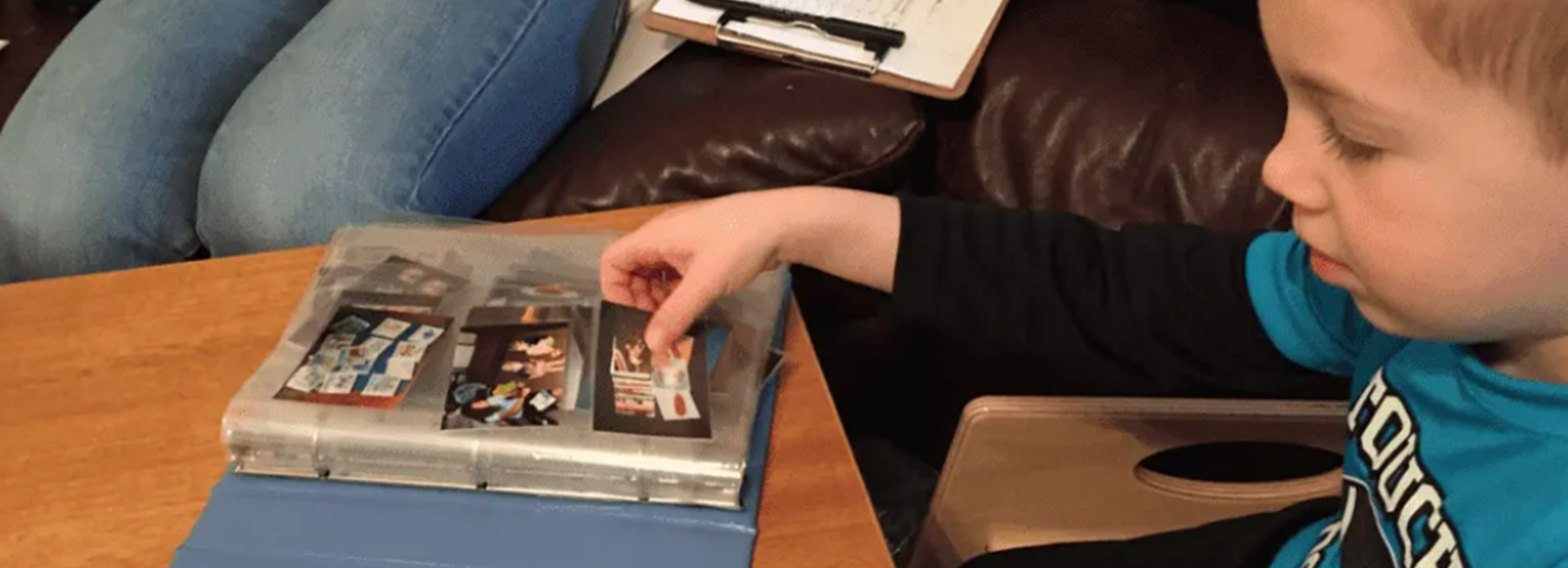
An activity schedule is a set of pictures, symbols, or words that show the sequence of steps to follow to complete routines or other daily tasks. They can be used to help your child complete a bedtime routine, independent leisure time tasks, making a snack, and a wide array of other activities. For example, to teach your child to get dressed, an activity schedule may first have a picture of under garments that signals to put those on first, then a picture of a shirt signaling the next item to put on, and so on until the individual is completely dressed. This visual activity schedule could be posted on the side of a dresser or on a closet door for your child to look at as he/she gets dressed.
How is a visual activity schedule created and implemented?
Here is a step by step guide:
Step 1: Choose visuals relevant to the task being taught
It is very important to select visuals that clearly represent the steps in the activity schedule and reflect upon your child’s preferences, interests, and strengths. Visuals of high interest are more likely to capture your child’s attention and motivate him or her to follow the schedule.
Step 2: Start with tasks with just a few steps and gradually increase the complexity
Begin with a simple task with a few pictures and gradually increase to a schedule with multiple steps.. An example of a more complex activity schedule is a sequence of activities for a child to do such as leisure tasks and chores.
Step 3: Pre-teach the steps in the activity activity
First model the steps your child needs to do to complete the activity schedule as you reference the pictures. If your child still seems uncertain, you can stand near or behind your child and provide physical prompts to complete each step as you reference the pictures. Gradually fade out your prompts until your child is following the activity schedule independently.
Step 4: Provide reinforcement and practice
Be sure that your child practices using his/her activity schedule often. Provide praise to him or her throughout the process as he/she completes steps correctly. Enthusiastically praise him or her when he or she is doing the entire schedule independently.
Step 5: Generalize skills
When your child becomes proficient in using visual schedules in specific settings, it’s crucial to generalize these skills across different environments and materials such as cleaning the dishes at grandma’s house once the task is learned at home.
Common mistakes and myths about Activity Schedules:
Myth! My child will become more dependent on me if I use an activity schedule. This is false, as once your child learns to follow the pictures in his/her activity schedule; he/she will be able to do the task independently.
Mistake! If my child does not quickly learn the steps in his/her activity schedule, he/she will never learn to be independent. This would be a mistake since your child may likely need prompts to learn to follow his/her activity schedule and you can gradually fade the prompts until he/she is independent.
Mistake! My child can only learn simple routines with an activity schedule. Initially, it is best to start off with simple routines, but over time he/she can learn more complex sequences with an activity schedule.
Summary:
A visual activity schedule is a powerful tool for teaching individuals to perform tasks independently. It is applicable to a wide range of tasks ranging from daily living to leisure activities. It can even be extended into the workplace later in life! If you need help getting started with selecting tasks to present through an activity schedule and teaching each step; your BCBA would be an excellent resource.